
Wake Up Locked Up? The 8-Hour “Overnight Support Gap” That Undoes Your Back Treatments Every Night
Sciatica, a herniated disc or lower back pain that never quite goes away? If you wake up stiff and it only loosens up once you're moving, the problem may not be your day. It may be the 8 hours your lower back spends with nothing underneath it.
“Herniated disc, sciatica down my left leg, 26 months of appointments. Not one person asked me how I slept.”Linda, 62, retired teacher · Customer experience

Your back has a pattern. You probably already know it.
You wake up locked up. You lie still and plan the roll onto your side. You sit on the edge of the bed and wait for your back to loosen up before you trust it to stand up straight.
Once you're moving, it eases. By the afternoon you're mostly okay. It's the morning that gets you.
And the next morning, it's back to square one.
You've tried stretches, heat, massage, physio, maybe a new mattress. Most of it helps. None of it sticks. Sleep is supposed to help you recover. Instead, you wake up set back.
There's a reason, and almost nobody talks about it. When you lie down, the natural curve of your lower back lifts off the mattress. For around 8 hours a night, that curve has nothing underneath it. We call it the Overnight Support Gap.
All day you work on your back. All night, the gap works against it.
Every night the gap stays open is another morning that starts at square one. Below, you'll see why daytime treatments can't reach it, and a 10-second test you can do on your own mattress tonight to find out if it's happening to you.
This is for you if…
- You live with sciatica: pain, tingling or tightness that runs from your lower back into your buttock or down the back of your leg, and is worst when you first get up.
- You've been told you have a herniated or bulging disc, and mornings are the hardest part of your day.
- You wake up stiff, sore or locked up. It loosens up once you're moving, then it's back the next morning.
- You've tried physio, stretches, pain relief, a new mattress, even a rolled-up towel under your back, and it helps, but it doesn't stick.
If two or more sound familiar, keep reading.
How the gap quietly shrinks your life
It rarely happens all at once. It happens one morning at a time:
- You need a few minutes on the edge of the bed before you can stand up straight.
- Your morning starts with a stretching routine before normal life can start.
- You start dreading bedtime, because you know how you're going to wake up.
- You skip the first walk of the day, because your back hasn't loosened up yet.
- You stop saying yes to morning plans: the school run, breakfast out, an early tee time.
- And for some people, you stop sleeping in your own bed.
None of that shows up on a scan. But it's how most people with morning back pain describe losing a little more of their life each year.

“I did everything I was told”
Linda taught second grade for 27 years. On her feet seven hours a day, and she never once thought about her back.
Fourteen months into retirement, she bent down for a laundry basket and something in her lower back went.
The MRI said herniated disc, L4–L5, with sciatica down her left leg. What it didn't say was what her mornings would become.
The leg pain was bad. But it was the mornings that took over her life.
Ten minutes to get out of bed on a good day. An hour on a bad one.
And the nights were no better. Every time she turned over, the pain shot down her leg and woke her, and her husband Tom with her. So she moved into the spare room.
For seven months, after 38 years of marriage, they slept at opposite ends of the hall.
She did everything right. One night she added it up at the kitchen table:
- Physical therapy, 34 visits$3,230
- Two injections (out of pocket)$2,200
- A new mattress$1,900
- Chiropractor, 12 visits$780
- Creams, a brace, a drawer of gadgets$310
- Total$8,420
Every one of them helped a little, during the day. Not one of them did anything about the 8 hours she spent in the gap. And every morning she woke up back at square one.
Customer experienceIndividual experiences vary.
Look at when your treatments happen
Everything in Linda's ledger has one thing in common. Not that it failed, but when it happens.

Keep doing what your doctor or physio recommends. It matters. This is about the hours it can't reach.

The hidden problem most people never think about
One of the first things I ask people with persistent lower-back discomfort is surprisingly simple:
How is your lower back being supported while you sleep?
Most people spend their days thinking about stretches, exercises, medication and posture. Then they spend seven or eight hours every night in one position without giving much thought to what their lower back is doing.
The nerves that form the sciatic nerve leave your spine in the lower back and travel down into your legs. When a disc bulges or herniates, or the area becomes irritated, those structures can become sensitive, and the position of your lower back can affect how comfortable it feels.
You may already notice this instinctively. When standing becomes uncomfortable, you sit down. When a position aggravates your back or leg, you shift until it eases. Your body naturally searches for positions that feel better.
But at night, particularly if you sleep flat on your back without adequate support, your lower back may settle into a position that feels uncomfortable or places additional strain on sensitive structures. And unlike during the day, you may stay there for hours.
That can help explain why some people wake feeling exceptionally stiff, sore or reluctant to straighten up first thing in the morning.
We spend a great deal of time thinking about what happens during the day, while often ignoring the position we spend hours in every night.
That's why I started paying much closer attention to overnight lumbar support. Rather than only asking, “How do we calm the discomfort once someone wakes up?”, I think it's also worth asking: “How can we make the lower back better supported during those hours of sleep?”
Why daytime treatments may not address the whole picture
Many conventional approaches can be extremely valuable. But they often address a different part of the problem.
- Physiotherapy
- Can improve strength, mobility and function. But your sleeping position still matters during the many hours you spend in bed.
- Pain medication
- May help control symptoms, but it doesn't change the position of your lower back while you sleep.
- Injections
- Can be appropriate for some patients and may reduce inflammation or discomfort, but they don't determine how your lower back is supported overnight.
- Surgery
- For appropriately selected patients, surgery can be very important and sometimes necessary. Sleep positioning is never a replacement for medical care.
My point is much simpler: your sleeping position is another piece of the puzzle. If you spend hours every night with your lower back unsupported, it makes sense to consider whether better support could make your nights, and your mornings, more comfortable.
That's the principle behind the Volara lumbar support pillow. It isn't about promising to cure sciatica or a herniated disc, or replacing medical treatment. It's about something far more straightforward: giving the natural curve of your lower back more consistent support while you rest.
— Dr Bert Cooper, DC · Volara product user
2:10 a.m. at the kitchen table

After a specialist said the word “surgery” for the first time, Linda couldn't sleep. At 2:10 a.m. she was at the kitchen table with her laptop, determined to understand why nothing was holding.
She found one sentence she'd never heard in 26 months:
“If your back is worst first thing in the morning, stop looking at your day. Look at your night.”
What the Overnight Support Gap actually is
Your lower back has a natural inward curve: the hollow. Stand up and you can feel it with your hand.
Lie down and the heaviest parts of you, your shoulders and especially your hips, press into the mattress. The curve between them doesn't. It bridges the space between two supported points, with little or nothing directly underneath it.
Think of a bridge with the middle support taken out. For eight hours.
If you have sciatica or a disc problem, you already know how much position matters. During the day you instinctively shift, lean or stand to ease it. In bed you can't, so whatever position your lower back is in, it stays there for hours.
We call it the Overnight Support Gap. It isn't a diagnosis. It's a plain name for something you can check on your own mattress tonight: the part of your back that bothers you most is often the part getting the least support while you sleep.
Ten minutes of stretching can't outwork 480 minutes in the gap.
During the day your body protects itself without you noticing. When something aches you shift, sit, stand or lean. Asleep, you can't. You spend hours in much the same position, every night, on whatever is underneath you.
- Lie on your back on your own mattress, legs straight, the way you usually fall asleep.
- Slide one flat hand, palm down, under the small of your back.
- If it slides in easily, right up to the wrist, that hollow is your Overnight Support Gap. It's there for hours, every night.
Linda lay down on the spare bed and tried it. Her whole hand went under, right up to the wrist. On a mattress just like the $1,900 one in their room.
Why a better mattress doesn't close it
A mattress is designed to support your whole body evenly. It can't tell where your lumbar curve is.
- Softer mattress: your hips sink further, and the curve above them can bridge even more.
- Firmer mattress: your hips sink less, but the curve still spans the space between them.
Either way, nothing is aimed at the one area you need help with.
- Shoulders & hips carry your weight
- Lumbar curve bridges an empty gap
- Same position for ~8 hours
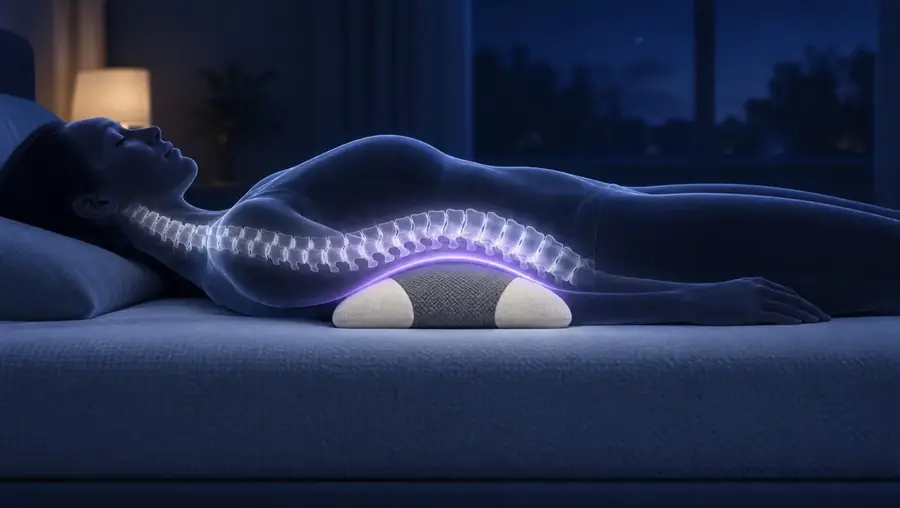
- Curve rests on dense, contoured foam
- The gap is filled, not left open
- Support that lasts until morning
Simplified illustrations, not medical imaging.
The DIY fixes, and why they rarely last the night
Plenty of people work this out on their own. A rolled-up shirt in the hollow. A towel under the lower back. A small pillow, moved around until it feels right. Linda tried them too. The idea is right. The tools usually aren't, because they can't hold the gap for 8 hours.
Two couch cushions
Felt different straight away. By morning, both were on the floor.
Doesn't stay putA rolled-up towel
Fine for ten minutes. By 2 a.m. it had unrolled and worked its way up under her shoulder blades.
Doesn't hold its shapeA spare bed pillow
Built for your head: too tall and too soft. It either over-arches your back or squashes flat.
Wrong height and densityA chair lumbar cushion
Made to push against an upright back. Lying down, it's usually too thick and too firm to sleep on.
Built for sittingWhat overnight support actually has to do
You don't need another big pillow, or a whole new mattress. You need the right amount of support, in the right place, all night. That means four things:
- Follow the curve. Shaped to the inward line of your lower back, not a flat block or a round tube.
- Hold its shape all night. Still supporting you at 3 a.m., not just at lights-out.
- Be thin enough to sleep on. Enough to fill the hollow, without forcing your back into an arch.
- Stay put when you turn. So it's still where you need it when you roll back.
A towel fails 2 and 4. A pillow fails 1 and 3. Couch cushions fail 4.
- Your mornings are worst because of what happens at night.
- For 8 hours, the curve of your lower back sits over an empty gap.
- Physio, pain relief, injections and a new mattress can't reach those hours.
- Towels, cushions and pillows can't hold the gap until morning.
Which means you need one thing: a support built specifically to fill the Overnight Support Gap, and keep it filled all night.
That's exactly what the Volara Pro™ was built to do
The Volara Pro™ Lumbar Support Pillow is a contoured memory-foam support designed for one job: the right amount of support, in the right place, all night. It sits in the hollow of your lower back, thin enough to sleep on and dense enough to still be there at 3 a.m.
Your mattress supports your hips. Volara supports the gap.
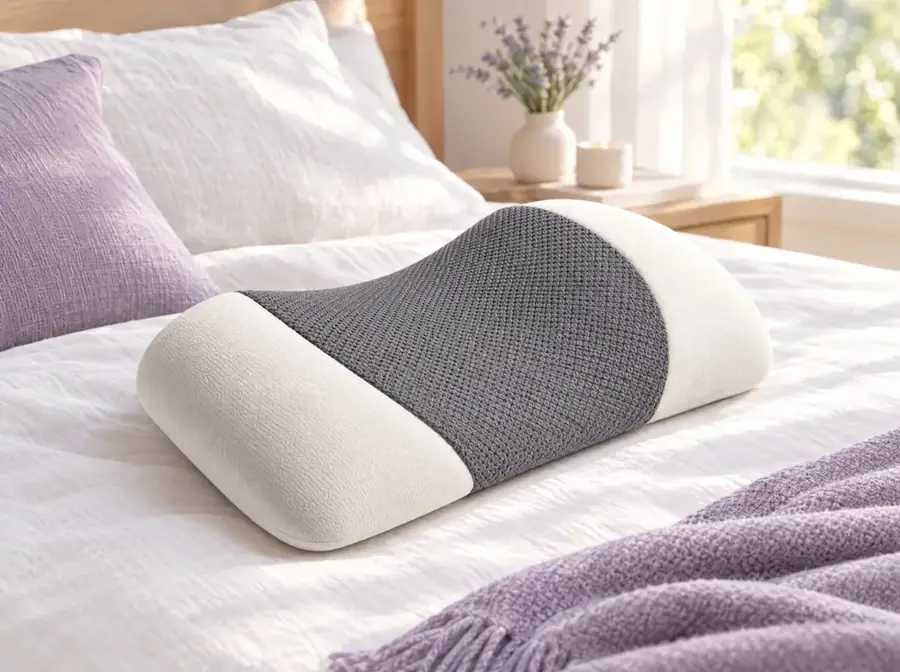
- Follows the curveContoured profile shaped to sit in the lumbar curve, not a flat block
- Holds its shapeDense memory foam that keeps supporting you hours after you've fallen asleep
- Thin enough to sleep onSoft, breathable cover. Fills the gap without forcing your back into an arch
- No new mattressWorks on the bed you already have. One small change to your sleep setup
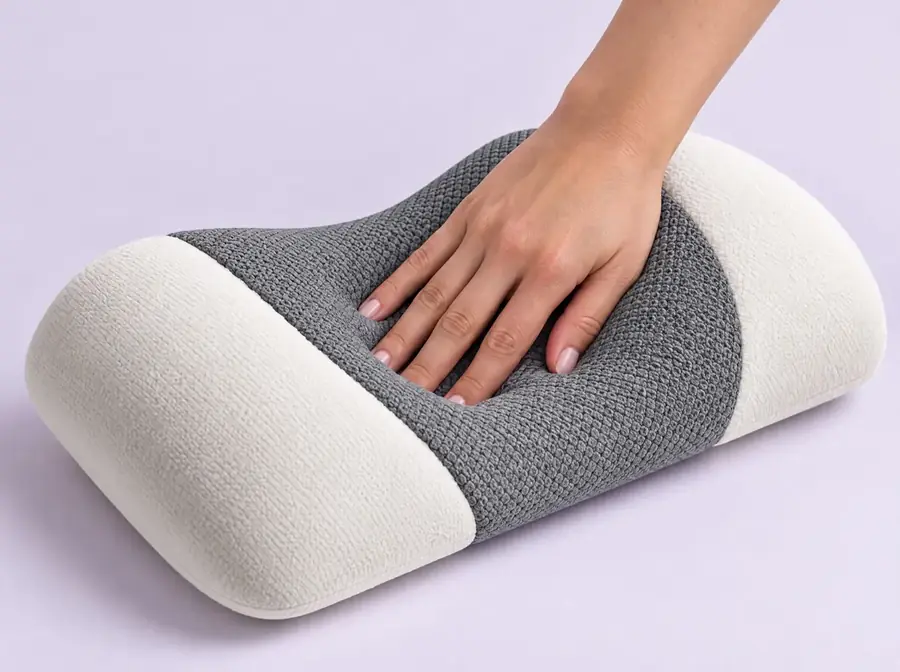
Linda's first weeks

“I still see my doctor. I still have the disc. Volara didn't change my MRI. It changed what I wake up to.”
CustomerLinda is a Volara customer. Individual experiences vary.
- First morningThe pressure she always woke up with was quieter. Still there. But quieter.
- End of week oneShe slept through the night. Then she moved back into their room, next to Tom, for the first time in seven months.
- Week threeShe got down on the floor to play trains with her grandson. And got back up.
- Week sixHer first morning walk with her husband in over a year.


CustomerIndividual experiences vary. Volara is not a treatment for any condition.
What to expect over your 90 nights
- Nights 1–3Any new sleep support takes a few nights to get used to. Place it under the small of your back, not your hips or shoulder blades, and play around with placement until it sits in the hollow.
- Week 1–2Notice the first five minutes of your mornings: how stiff you feel, how long you sit on the edge of the bed, those first few steps.
- By night 90You'll know. If it isn't for you, send it back for a refund.

Why every night counts
It's easy to put this off. But the gap doesn't take nights off.
- In bed, 11 p.m.–7 a.m.
- Morning stretch, 10 min
That's 2,920 hours a year your lower back spends over that gap, compared with roughly 60 hours of ten-minute morning stretches. Every night you leave it empty is another morning that starts at square one.
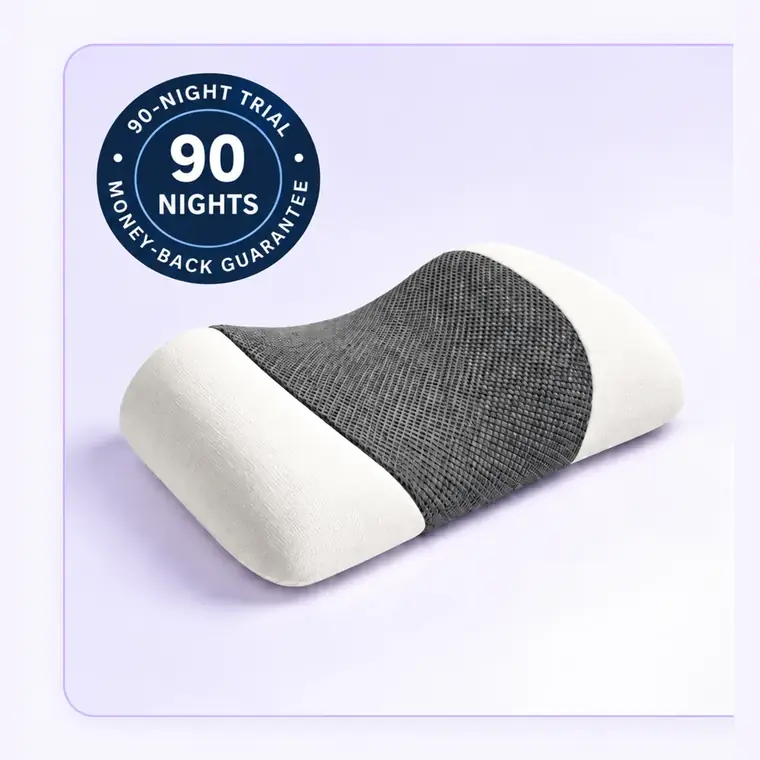
Sleep on it for 90 nights
Use the Volara Pro™ every night for up to three months. Notice how you get out of bed: whether you still have to stretch first, wait to loosen up, or brace for the first step.
If it isn't right for you, send it back within 90 nights for a refund. Full guarantee terms.
Free shipping to the US & Canada.
What customers say
How many more mornings?
You already look after your back all day. The stretches, the heat, the careful way you get out of the car. All of it is worth something.
But if sleep keeps setting you back to square one, the longest part of your day is the one you're not managing at all.
The goal is simple: a morning where you get out of bed without bracing for it.
Check the gap tonight. Then give everything else you do a chance to stick.
When to see a doctor first: numbness or weakness in your legs that's getting worse, numbness in your groin or inner thighs, any change in bladder or bowel control, fever, or pain that wakes you in any position, or that followed an injury. Volara is a comfort and sleep-support product, not a treatment for sciatica, herniated discs or any medical condition. If you've had back surgery or are under a specialist, check with them first.